

| Lens build | How it works | Best for |
|---|---|---|
| Multi Focus™ | Three strengths in one lens — full reading power low, an easier zone for a screen in the middle, about half strength up top | Long desk days spent shifting between phone, monitor, and the person who just walked in |
| Pop of Power® Bifocal-Style | A magnified reader segment at the bottom; the rest of the lens unmagnified | Mostly clear distance vision with a quick boost for fine print |
The quick way to choose comes down to distance. Do you move between near, mid, and far all day? Multi Focus™ keeps one pair on your face for the whole shift. Is your distance vision already fine? The bifocal-style build gives you a pop of magnification and keeps the top of your view clear.
Matching a Pair to Your Day
Get the Strength Right First
Relief starts with the correct power, measured in units called diopters. Hold your phone or book where you normally keep it, and try a lower strength first. Step up only if the text still makes you lean in. Pick the lowest power that makes reading easy, because too much power just trades one squint for a headache. With Multi Focus™, the number you pick sets your full reading strength at the bottom, and the other two zones scale from there. An eye exam pins your exact figure down. It's the right call if one eye reads clearly worse than the other, or if close-up print blurs fast rather than slowly.
Then the Frame and the Features
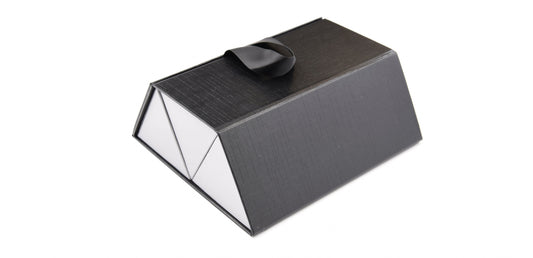
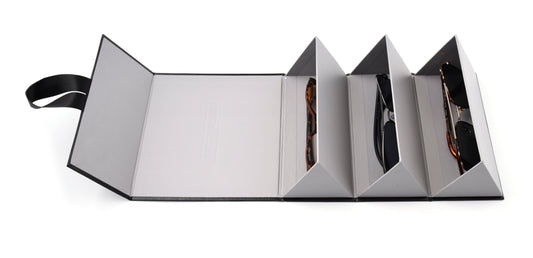
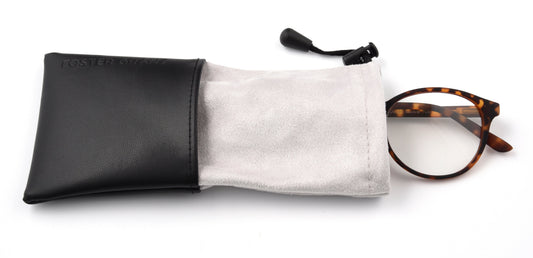
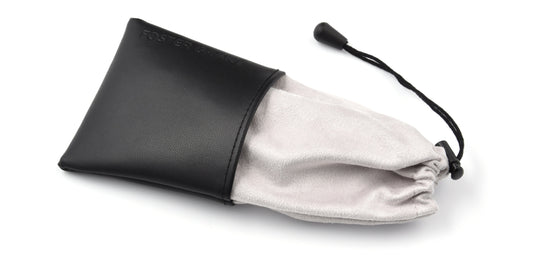
Now the fun part. The Braydon pairs its gunmetal frame with scratch- and impact-resistant lenses, and it ships with a protective case and a cleaning cloth. That's handy for a pair that lives in a bag. The acetate women's styles run warmer and bolder, from the black Gloria to the tortoise Teresa and the red Carina. Every pair filters blue-violet light the same way, so the frame is where you get to have an opinion.
Do Blue Light Readers Actually Work?
The fair answer has two halves, and we won't hand you only the flattering one. Start with comfort, where the evidence is measured. A 2023 Cochrane review of 17 trials looked at blue-light filtering lenses. It found they probably make little to no difference to short-term eye comfort at the computer, and their effect on sleep quality is unclear. [1] The American Academy of Ophthalmology does not recommend special glasses just for screen time either. It points instead to how we use screens, long stretches without a break, as the bigger reason eyes feel tired. [2]
So lead with what's solid. What a blue-light reader reliably delivers is the reading: crisp near vision at the strength you need, in a frame you will actually wear. Many people who spend the day on a laptop simply prefer how their eyes feel in one, and that preference is genuine even where the science stays cautious. Pair the readers with a simple habit: look away from the screen often, and remember to blink. Then you have both bases covered. When you're ready, start with Foster Grant's blue-light readers. They sit alongside the full Multi Focus reading glasses range, the bifocal reading glasses, and the wider blue light glasses collection.
Sources
[1] Cochrane (Singh S, Downie LE, Anderson AJ, et al.), 2023. A systematic review of 17 randomised trials. It found blue-light filtering lenses probably make little to no difference to short-term visual comfort with computer use. Their effect on sleep is uncertain. (cochrane.org)
[2] American Academy of Ophthalmology. The AAO does not recommend blue-light glasses for computer users. It links screen-related discomfort to how screens are used, rather than to blue light. (aao.org)


