| Lens zone | Distance | What it is for |
|---|---|---|
| Bottom third | Near, about sixteen inches | Full reading strength for books, menus, and fine print |
| Middle third | Intermediate, arm's length | Reduced power for comfortable computer use |
| Top third | Face-to-face, across the des | About half your reading strength, for talking to someone nearby |
Getting the Strength Right for a Screen
Comfort at the screen starts with the correct power, measured in units called diopters. With Multi Focus™, the number you choose sets the full reading strength at the bottom, and the computer and distance zones scale down from there. So you pick for your close reading, and the screen zone follows. Choose the lowest power that makes small print easy. Too much magnification only trades a squint for a headache.
One step makes the difference: test at your real screen distance, not across a shop floor. Sit the way you sit at your desk. Look through the middle of the lens, and check it against your own monitor. Most people's near vision slips gradually after about forty. This normal shift is called presbyopia, so the power that suited you last year may not suit you this year. [2] If one eye reads clearly worse than the other, an eye exam pins down your figure. Either way, you get Prescription Quality Magnification at a Non-Prescription Price.
Work almost entirely at the monitor, and rarely on fine print? A single-vision reader is a sound alternative. Set a touch below your book strength, it is dedicated to screen distance alone. Most screen-heavy workers still read labels, phones, and paperwork, though. That juggle is exactly what Multi Focus™ was built for.
Where Blue-Light Filtering Fits In
Where blue light comes from may surprise you. The main source of blue light, including blue-violet light, is sunlight, even indoors through a window. Screens and other artificial sources come after the sun.
On a Foster Grant reader, blue-light filtering is a lens option, not a separate pair you have to choose instead. The Braydon Multi Focus™ Blue Light reader keeps all three reading zones and incorporates a patented lens technology that filters at least 30% of blue-violet light (400-455nm), the higher-energy end of the light your eyes can see. It helps filter blue-violet light from the sun as well as from artificial sources like your screen, so the lens works for the window beside your desk as much as for the monitor in front of it.
*Filters at least an average of 30% of blue-violet light (between 400 and 455nm as stated by ISO TR 20772:2018) as measured in 5 nm increments. Covered under U.S. Pat. No. 8,360,574. Other U.S. and foreign patents pending.
At the desk, the Braydon earns its place on two counts. You get the three sharp distances that make screen work easier: full strength for paperwork, reduced power for the monitor, and a lighter top zone for the person across the desk. And plenty of people who work on a laptop all day simply prefer how their eyes feel in a blue-light reader. A 2023 Cochrane review of seventeen trials found the filter on its own probably makes little difference to short-term visual comfort at the computer, so the magnification zones stay at the heart of a good screen pair. [3]
Blue Light Glasses
Candra Blue Light Glasses
Braydon Blue Light
Aruba Kids Blue Light Glasses
Bali Kids Blue Light Glasses
The Frame and the Habit That Backs It Up
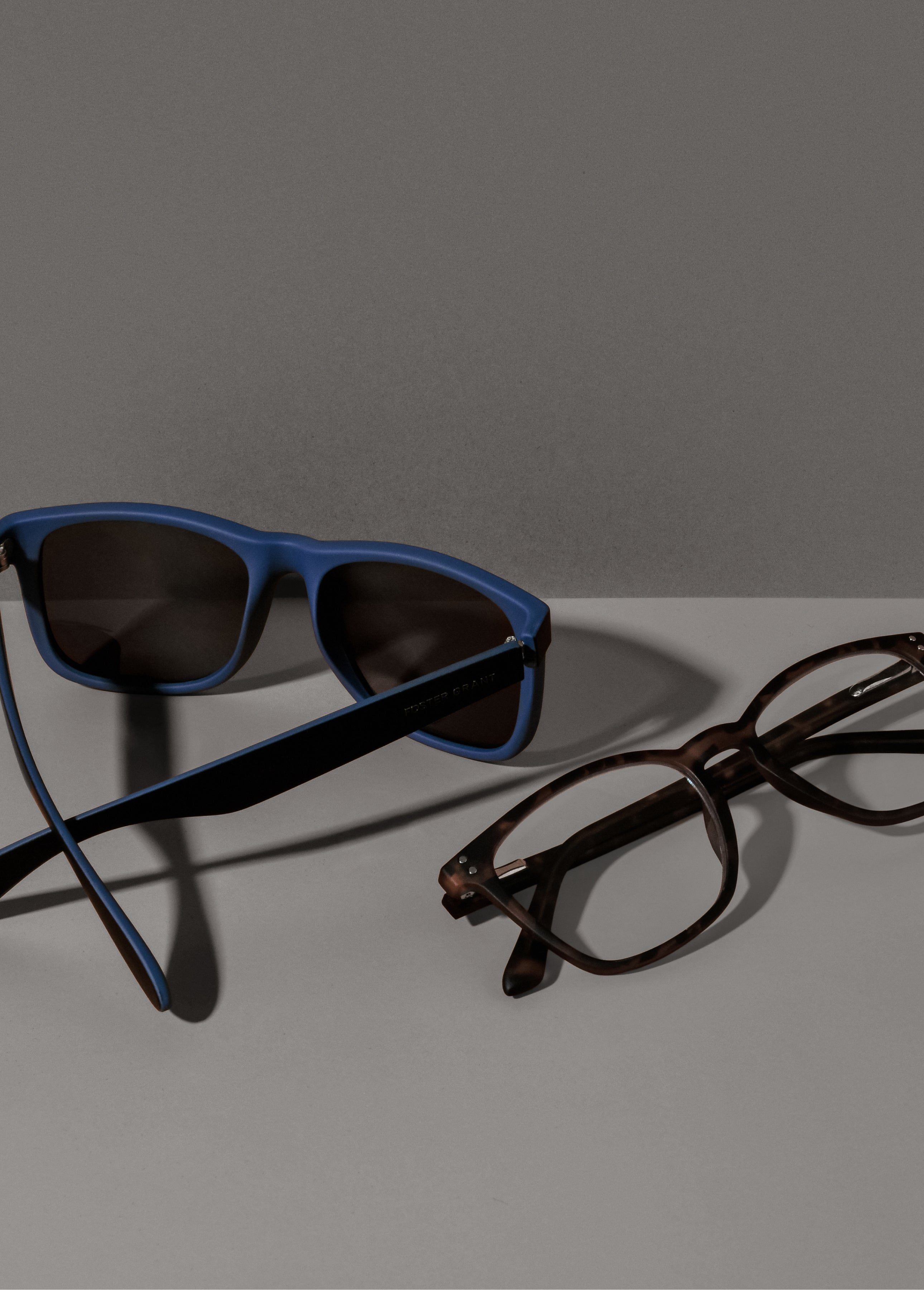
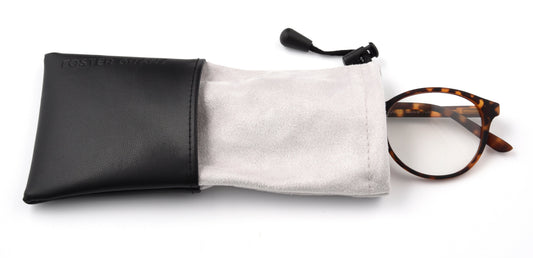
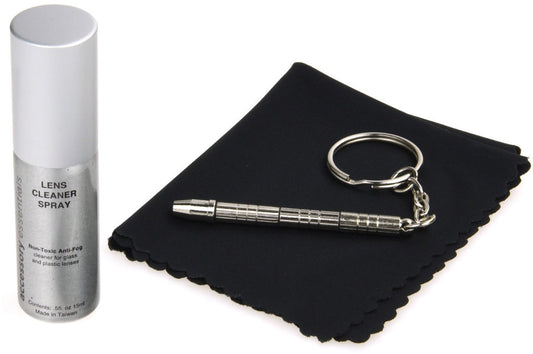
The frame is where you finally get an opinion. The Braydon's slim gunmetal reads well at a desk and on a video call, and its case and cloth make it easy to keep by the keyboard. Prefer something warmer and bolder? The acetate women's styles and the tiger-striped McKay carry the same Multi Focus™ lens inside. The lens does the seeing. The frame decides how you show up on camera.
One habit works alongside any pair you pick. The American Academy of Ophthalmology points to how we use screens, not the screens themselves, as the bigger driver of tired eyes. It recommends the 20-20-20 rule: every twenty minutes, look at something about twenty feet away for twenty seconds. [4] Good glasses and that short break are a team, not a trade-off. When you are ready, start with Foster Grant's Multi Focus™ reading glasses for the three-distance lens, or the blue-light readers for the same idea with blue-light technology built in. Both sit within the wider reading glasses range, where the first job is still the one that never changes: finding the power that makes your screen easy to read.
Sources
[1] American Optometric Association — a computer screen should sit about twenty to twenty-eight inches from the eyes, at the intermediate working distance, just below eye level. (aoa.org)
[2] American Academy of Ophthalmology — presbyopia is the age-related decline in near focusing. It commonly becomes noticeable after about age forty. (aao.org)
[3] Cochrane (Singh S, Downie LE, Anderson AJ, et al.), 2023 — a systematic review of seventeen randomized trials found blue-light filtering lenses probably make little to no difference to short-term visual comfort with computer use. (cochrane.org)
[4] American Academy of Ophthalmology — links screen discomfort to how screens are used rather than the screens themselves, and recommends the 20-20-20 rule. (aao.org)