

| Reader Type | How the Lens Is Set Up | Best for | Foster Grant Example |
|---|---|---|---|
| Single-Vision | One strength across the whole lens | Focused reading in one spot | Rowland, Gideon folding Micro-Readers |
| Pop of Power® Bifocal-Style | Magnified segment at the bottom, clear above | Reading, then glancing up | Everett, Farrah |
| Multi Focus™ | Three graded strengths in one lens | Reading, a computer, and conversation | James, Sawyer, Conan |
The Multi Focus™ lens uses a freeform design that trims edge blur and widens the usable field of view. That helps when your eyes travel between a document and a monitor all day. If most of your reading is a novel in one chair, a single-vision pair is simpler. See how the ranges compare in our Multi Focus™ readers and bifocal reading glasses collections.
How to Choose Your Reading Strength
Strength is where most people stall. Ready-made readers come in graded steps, usually from +1.00 to +3.00 and sometimes higher, each step rising by a quarter diopter (the unit that measures magnifying power). A higher number means stronger magnification. A simple approach keeps you out of trouble:
- Start with the lowest strength that brings ordinary print into easy focus at your natural reading distance.
- Move up a quarter step only if the words still look soft, since too much power makes you hold the page uncomfortably close.
- Watch each eye separately, because if one reads clearly and the other lags, that gap is worth checking.
Reading glasses answer a normal change in near focus that tends to arrive in your 40s, as the lens inside your eye loses some flexibility. This is a normal part of aging, not a disease. [1] Still, readers are not a stand-in for an eye exam. If print blurs at every distance, if one eye is far sharper than the other, or if reading brings on headaches, see an eye-care professional before you settle on a number.
Getting the Fit Right
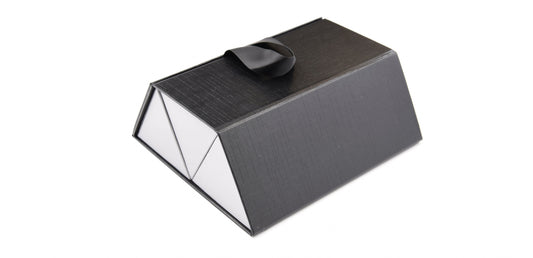
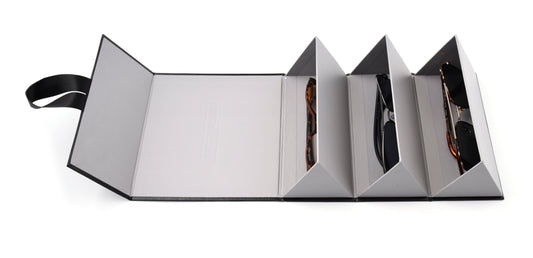
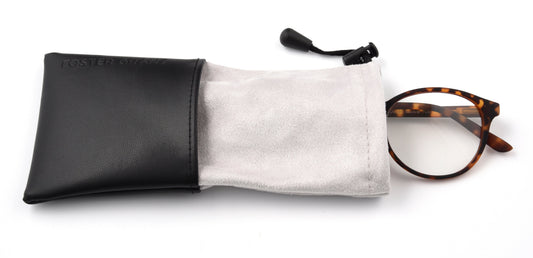
A reader lives on your face for hours, so fit decides whether you keep reaching for it. Spring hinges (temples that flex outward and spring back) hold a pair steady without pinching through a long read, and you will find them on styles like the round, matte-tortoise Everett. If glasses tend to slide down or dig in, a low-bridge design helps. The Rowland, from our Styles for Y.O.U.™ collection, uses a Low Bridge Fit with Expanded Temples that cuts the slipping and pinching for higher cheekbones and lower nose bridges. For a pair that travels, the Gideon folds into a compact case that vanishes into a bag. Whatever the frame, look for scratch- and impact-resistant lenses; both the Conan and the Braydon carry them, so an everyday pair shrugs off a drop into your bag.
If You Read on Screens
A lot of reading now happens on a phone or a monitor, and that is where blue-light readers come in. The Braydon Multi Focus™ Blue Light reader stacks three reading zones into one lens, and it also helps filter blue-violet light from the sun, as well as artificial sources, including digital devices. Blue-violet light is the slice of the spectrum between 400 and 455nm, as stated by ISO TR 20772:2018. [2] Keep it in perspective, though: the main source of blue light, including blue-violet light, is sunlight, even indoors through a window. These lenses filter a portion of that light, not every wavelength, and we make no health promises about it. What wearers tell us is simpler — they prefer how their eyes feel after a long day of scrolling. Want the same filter in a dressier frame? The Farrah brings it in a gold-tone metal aviator. Browse the choices in our blue light readers collection.
If You Read in the Sun
Reading does not always happen indoors — there is the paperback at the beach and the menu on a bright patio. Sun readers handle that by being sunglasses and readers in one. Our Latte sun readers place the reading power in a segment at the bottom of the lens, and the rest is a tinted sunglass with no magnification (not a full-lens diopter). So you can read the fine print, then look up at the water. They are built as true sunglasses, so they carry 100% UVA-UVB protection, the kind that matters any time you are outdoors. See the range in our sun readers collection.
Landing on Your Best Pair
The best reading glasses are less a single product than a short set of decisions. Count the distances you read at, and let that choose the lens design. Find the lowest strength that makes print effortless. Then pick a fit you will happily wear for hours — spring hinges, a low bridge, or a folding frame. Do that and "best" stops being someone else's list and becomes the pair you actually keep on. When you are ready to match a style to your face and your day, start in our reading glasses hub. See more, be more, one clear page of small print at a time.
Sources
[1] American Academy of Ophthalmology — presbyopia, the age-related decline in near focus, occurs because the eye's lens gradually loses flexibility; it is a normal part of aging.
[2] ISO TR 20772:2018 — blue-violet light is defined as the 400 to 455nm portion of the spectrum.


