You hold your phone farther away than you used to. In a dim restaurant, the menu takes an extra second to sharpen. By the end of a long day, small print feels like work, and your eyes ache. So you wonder two things at once: will readers actually help, and are they quietly bad for your eyes?
Here's the short answer: over-the-counter readers won't harm or weaken a healthy eye, and putting them off does you no favors. [1] The right pair does the close-up focusing your eyes now find hard. That's what takes the strain out of near tasks. Let's look at why the ache starts, and how to pick a pair that genuinely helps.
Each eye holds a clear, flexible lens that changes shape to sharpen whatever you look at. As you get older, that lens gradually stiffens. Between about ages 40 and 60, it keeps losing flexibility, so near text takes more and more effort to focus. [1] [2]
That effort is the strain: your focusing muscles are working overtime to do a job the lens can no longer manage on its own. The signs are all about distance and light. You push the phone out to arm's length, you tilt a page toward the window, and fine print in low light becomes a real squint. None of it means your eyes are damaged. It's a normal shift that almost everyone runs into eventually.
No. Readers are just a visual aid, not medicine. They magnify near text so your eyes stop overworking, and they don't treat any eye problem. [1]
The worry usually sounds like this: "If I start wearing readers, won't my eyes get lazy and worse?" They won't. Take a pair off, and close work feels hard for a moment. That's the contrast you're feeling, not a change inside your eye. The stiffening happens on its own schedule, whether you wear readers or not. A single-strength pair like the Foster Grant Sloan (a slim black rectangular frame) simply rests your eyes by doing the magnifying for them. That's Prescription Quality Magnification at a non-prescription price, and the reading glasses collection is where most people start.
Relief only shows up at the correct power. Readers come in a range of strengths (measured in units called diopters), and the wrong one just trades one kind of strain for another. Too weak and you still squint; too strong and you get a headache and a swimmy, tunnel-like feeling.
Here's how to find your pair:
One caveat is worth taking seriously: the exact power you need is best confirmed by an eye exam. [1] An off-the-rack guess gets many people close. A professional pins it down exactly, and rules out anything a stronger lens would only mask. Lightweight metal styles like the Skyler and the Athena come across that strength range. Once you know your number, the frame is the fun part.
A lot of daily strain isn't about one distance at all — it's the constant back-and-forth. Readers on for the recipe. Readers off to see who walked in. Readers pushed up your forehead for the laptop. All that on-and-off wears on you.
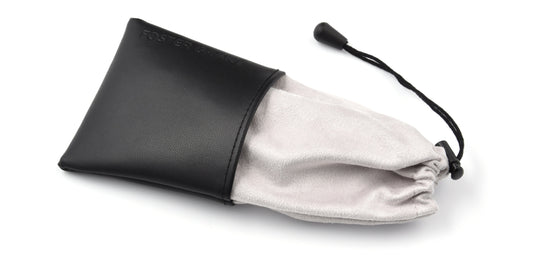
Multi Focus™ readers fix it with three strengths built into one lens. The bottom third holds your full reading power for books and fine print. The middle third eases off for a screen at arm's length. The top third sits at about half strength for talking to someone across the desk. Styles like the James, the McKay, the Sawyer, and the Areva let you keep one pair on. Your eyes just settle into whichever zone the task needs. You can compare frames across the Multi Focus reading glasses range, and every pair ships with a case and a cleaning cloth.
Spend all day on a laptop, and you'll see readers sold with a blue-light angle, so it helps to be clear about what does what. The power is the part that eases close focus. The lens filter is a separate feature. Multi Focus™ styles like the Braydon and the McKay Blue Light help filter blue-violet light (400-455nm) from the sun, as well as artificial sources like screens. Blue-violet light is between 400 and 455nm as stated by ISO TR 20772:2018.
Two honest notes keep this in perspective. First, the main source of blue light, including blue-violet light, is sunlight, even indoors through a window (not your monitor). Second, the filter isn't what eases close focus; it filters a portion of that light band, and many people simply prefer how their eyes feel over a long screen day (a preference, not a cure). Foster Grant's blue-light readers pair that filter with real power. Then add the habit eye doctors suggest: every 20 minutes, look at something about 20 feet away for at least 20 seconds. [3]
Bright light brings its own strain. You step outside with a book or a phone, and now you're fighting glare on top of focus. Plain readers leave your eyes wincing, while sunglasses leave the page a blur.
SunReaders® handle both at once, sunglasses and readers in one. The reader segment sits at the bottom of the lens; the rest of the lens is a tinted sunglass with no magnification (it isn't a full lens diopter). The aviator-shaped Accuracy, the amber-mirrored Jorge, and the Braydon Multi Focus™ SunReaders all carry 100% UVA-UVB protection. Many add spring hinges for a comfortable, flexible fit. The sun readers collection is built for the porch, the pool deck, and the passenger seat.
Readers are a great answer to ordinary age-related near focus, but they aren't a replacement for an eye exam. A few signs mean it's time to see an eye-care professional rather than reach for a stronger pair.
Book the visit if strain, aching, or headaches stick around even in well-fitted readers. Book it if one eye is clearly worse than the other, or if close-up blur comes on fast rather than gradually. And book it if a pair that used to work suddenly doesn't, even at a new strength. A professional can confirm your exact power, and check that nothing else is behind the ache. Sort that out first, then pick the pair you'll actually enjoy wearing, whether that's a single-strength classic, a Multi Focus™ all-rounder, or a pair of SunReaders® for the days you'd rather be outside.
[1] American Academy of Ophthalmology, "Eyeglasses: How to Choose Glasses for Vision Correction" — over-the-counter reading glasses effectively correct age-related near vision, delaying them is of no benefit and they do not make your sight worse, and the specific power you need should be determined by an eye exam. (aao.org)
[2] American Academy of Ophthalmology — between roughly ages 40 and 60 the eye's natural lens keeps losing flexibility, so near focus gradually becomes harder. (aao.org)
[3] American Optometric Association — the 20-20-20 rule: every 20 minutes, take a 20-second break to look at something about 20 feet away. (aoa.org)