

The shirt-tail wipe is the first move almost everyone makes when their lenses white out, and it's the one that backfires. Fog isn't a smudge you can rub away. It's a film of condensation that reforms the second warm breath meets a cool lens. Dragging dry cotton across an anti-fog coating only wears the coating down. Figure out why the water keeps landing there and you can stop it at the source, no wiping required. The rest of this walks through exactly where it comes from and what actually clears it.
Why Your Lenses Fog Up in the First Place
Your breath leaves your body close to body temperature, about 98.6°F, and by the time it reaches your lenses it's often close to 100% relative humidity, nearly as much moisture as air can hold. The moment that warm, humid air hits a lens sitting at room temperature or colder, the air can't hold onto that vapor anymore. It has crossed its dew point: the temperature at which invisible water vapor turns back into liquid (the same reaction that fogs a bathroom mirror after a hot shower). Thousands of microscopic droplets bloom across the lens surface almost instantly. [1] That's the same physics behind a cold glass of iced tea sweating on a summer porch. Your lenses are just the cold surface this time.
Masks make the problem worse because they redirect it rather than cause it. A mask that fits loosely at the bridge of your nose funnels warm breath straight up and out the top. That air lands directly on the one surface nearby that's cooler than your face. Step out of an air-conditioned car into thick August humidity, and a pair of polarized, UV400 sunglasses left on the dash can fog in seconds. Lean over a steaming pot on the stove and you'll get the same result, just without a mask involved.
Fix It in the Next 30 Seconds
If you have a sink and half a minute, most fog clears before you even sit back down. Work through these in order and stop at the one that matches what's actually causing yours.
- Rinse your lenses in warm, soapy water and shake them dry instead of wiping them. Dish soap leaves a thin film that makes water spread into a sheet instead of beading into fog (the exact trick most anti-fog sprays are built around).
- Fold the top edge of your mask down and pinch the nose wire tight against the bridge of your nose. Most mask-related fogging comes from a gap at the top, not the mask itself.
- Run your lenses under warm tap water for about 10 seconds before you step out into the cold. That narrows the temperature gap between the lens and the outside air, so condensation has less to work with.
- Nudge your glasses slightly down your nose when you're bent over a task, whether that's cooking, exercising, or checking under the hood. Give your breath somewhere to go besides straight into the lenses.
- Give a hot drink or a bowl of soup a minute to cool before you lean in. That one minute is often the entire difference between clear lenses and a fogged-over dinner.
Habits That Keep the Fog From Coming Back
A mask with a built-in nose wire beats a flat one every time, especially over 8 hours on the job. It closes the one gap that actually funnels breath upward. No wire on yours? A folded pipe cleaner or a strip of medical tape across the bridge does the same job.
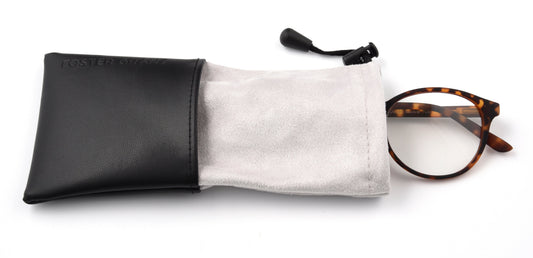
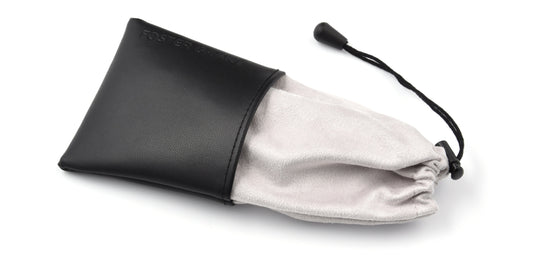
Technique matters just as much when you clean your lenses. A cotton shirt carries the oils and dust your hands pick up all day. That residue grinds into the surface when you rub it across your lenses, giving condensation more texture to grip, not less. Keep a microfiber cloth in your Foster Grant glasses case (the one that came with your last pair works fine) and reach for an actual lens spray instead of your own breath and a sleeve. That combination keeps the film from building up in the first place.
Loose nose pads or temples that have drifted out of adjustment let your glasses sit slightly off from where they're designed to sit. That shift changes the angle your breath travels at on the way past the lens. If your frames have started sliding or sitting crooked, that's worth fixing before you blame the weather.
When It's Your Frames, Not Just the Weather
When you're bent over a table saw or a stovetop for a whole shift, the fog stops being about the season and starts being about the gear. If a rinse, a better mask fold, and a cleaner cloth haven't fixed it, the lens itself is the next thing to look at.
Foster Grant's Guardian Pro Barrier and Guardian Pro Armor Fits Over safety glasses are built for exactly this. They wear over your everyday glasses or on their own, and they're ANSI Z87.1+ and OSHA approved for real jobsite use. Their UV400 polycarbonate lenses carry an anti-fog coating that reduces how much moisture can condense on the surface in the first place, not just wiping it away after the fact. Armor's frame is vented specifically to let warm air escape before it ever settles on the lens, and it fits over frames up to 132mm wide. Both styles use BendToFit® temples that adjust to your face instead of staying one fixed shape. They're part of Foster Grant's broader fits-over and clip-on lineup, built for exactly this kind of everyday problem-solving.
Readers run into their own version of this over a steaming pan or a hot mug. Foster Grant's Parker and Joey styles build the same idea into a pair of reading glasses. Their anti-fog coating helps resist water droplets from adhering to the lens, so the page in front of you stays sharp instead of hazy two paragraphs in.
Match the Fix to the Fog
The right answer depends on how often you're fighting it. A once-a-morning fog stepping out the front door is a 30-second problem, and a rinse, a mask fold, or ten seconds under warm water clears it. Fog that comes back every ten minutes isn't a habit you can out-wipe. That's the reality over a stove, under a mask for a full shift, or behind a table saw. That's the point where the coating has to carry the load instead of your cleaning cloth. Foster Grant builds anti-fog straight into the lens, from fits-over safety glasses for the jobsite to readers for the kitchen table, so the water sheets off instead of blooming across your view. Once you know which kind of fog you're actually dealing with, pick the pair that matches where you keep losing sight of the work in front of you.
Sources
[1] Wikipedia, "Dew Point" — when air in contact with a colder surface cools below its dew point, water vapor condenses into liquid on that surface.


